Managing grid trading in 2025 remains a top choice for traders aiming to capture profits in ranging markets without needing to predict exact price direction. However, while the strategy may appear simple, managing a grid system without the proper tools can quickly lead to chaos. Thanks to major advancements in automation, analytics, and broker technology, managing grid trading in 2025 is now more precise and accessible than ever before.
If you’re serious about managing grid trading in 2025 with consistency and control, these are the best tools and platforms to help you build a sustainable and profitable setup.
1. Advanced Grid Trading Bots
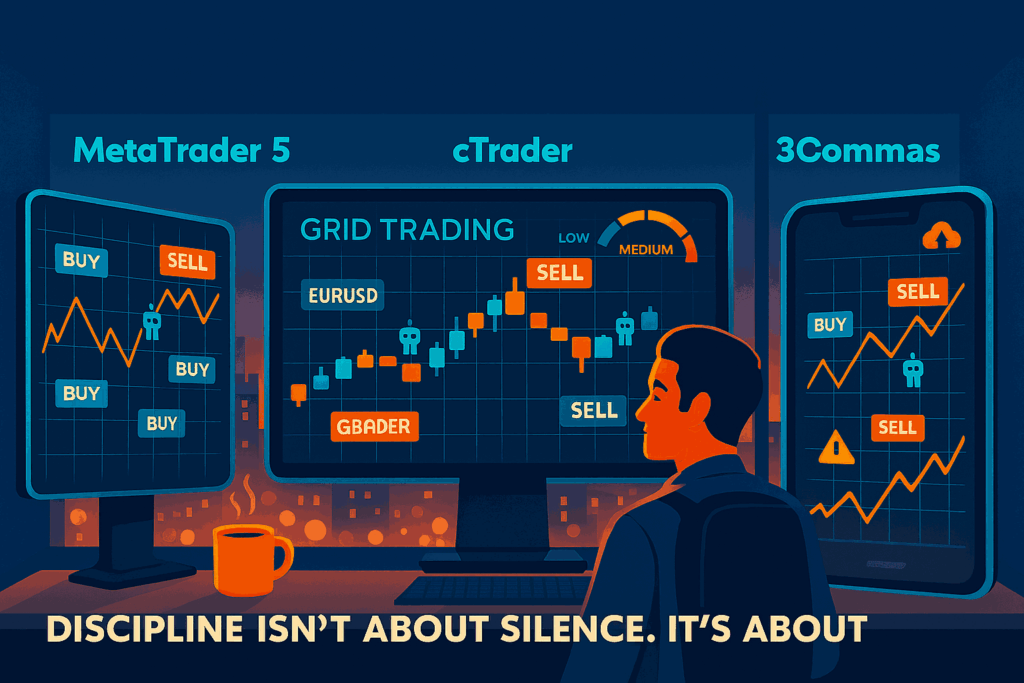
Automated bots are the backbone of modern grid trading. They handle repetitive order placement, spacing, and monitoring tasks nearly impossible to manage manually in fast-moving markets.
- MetaTrader 5 Grid EAs: Still one of the most widely used options, MT5 offers dozens of specialized Expert Advisors (EAs) built for grid trading. Many now come with AI-powered volatility filters to reduce the risk of grid traps.
- cTrader Automate: Offers superior execution speed and customizable scripts. Traders can fine-tune grids with adaptive spacing, trailing stops, and news filters.
- Standalone Cloud Bots: Platforms like 3Commas and WunderTrading are extending their services beyond crypto to Forex, letting traders run cloud-based grid bots with mobile oversight.
Why they matter: Bots eliminate human error, execute trades instantly, and allow for multiple grid strategies across pairs simultaneously.
2. Risk and Money Management Tools
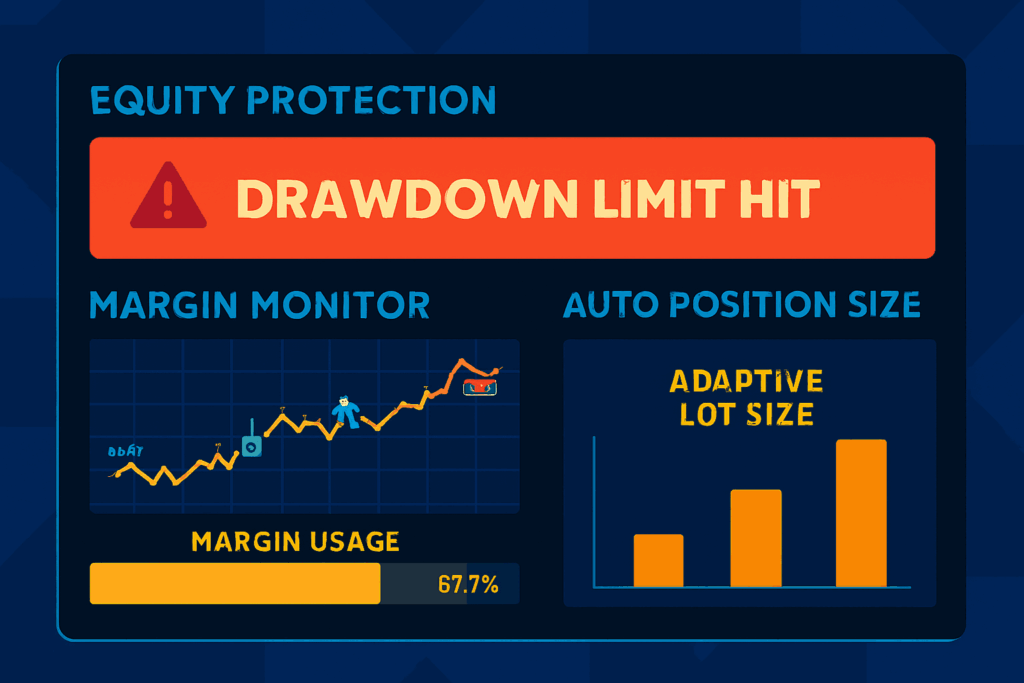
Grid systems can generate steady returns, but they also carry risks of runaway losses if a strong trend goes against you. That’s why risk management tools are non-negotiable.
- Equity Protection Scripts: Many brokers now provide built-in equity stop-loss systems. These automatically close all positions if losses exceed a certain percentage.
- Margin Monitors: Apps like Myfxbook Risk Analyzer or FX Blue help traders track margin levels and assess drawdowns in real time.
- Position Size Calculators: Tools that automatically scale lot sizes according to account equity and volatility ensure grids don’t over-leverage.
Why they matter: They prevent catastrophic losses while keeping grid strategies sustainable over the long term.
3. Volatility and Market Condition Scanners
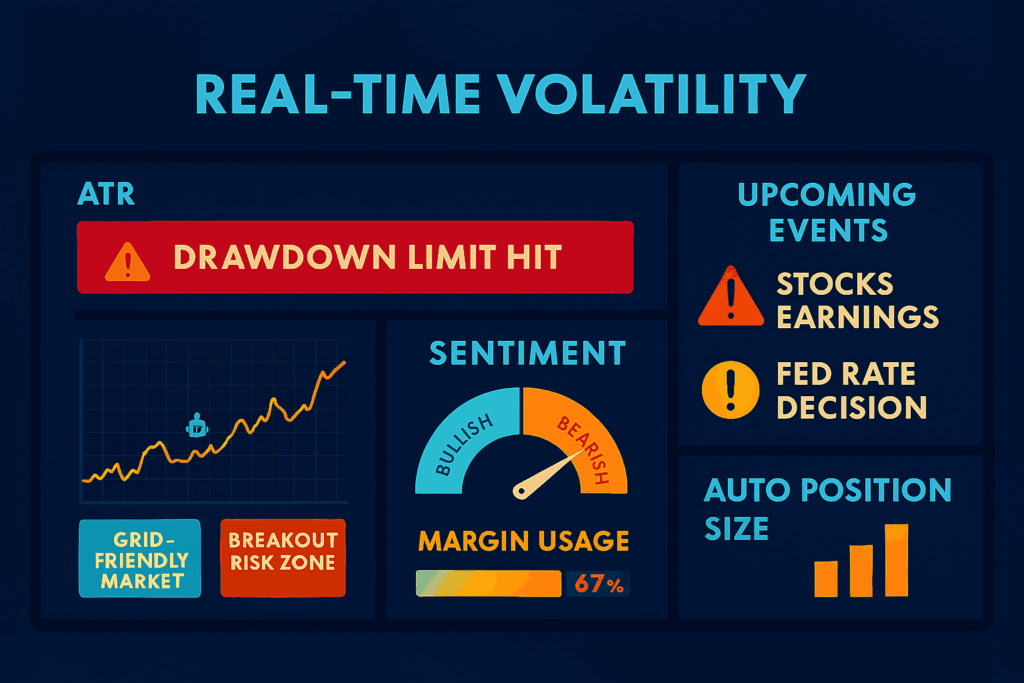
Grid trading works best in sideways or moderately volatile markets. Tools that identify when conditions are favorable can make or break your strategy.
- ATR and Volatility Dashboards: Many trading platforms now offer dashboards showing real-time Average True Range (ATR) readings. This helps traders decide whether to tighten or widen grid spacing.
- Sentiment Tools: Platforms like TradingView and City Index sentiment trackers display positioning data, making it easier to avoid grids when the market is leaning heavily one way.
- Economic Calendar Alerts: Investing.com, Myfxbook, and broker-integrated calendars can pause or adjust grids before high-impact events like NFP or CPI data.
Why they matter: They help avoid placing grids during breakout conditions where the system is most vulnerable.
4. Trade Journals and Performance Trackers
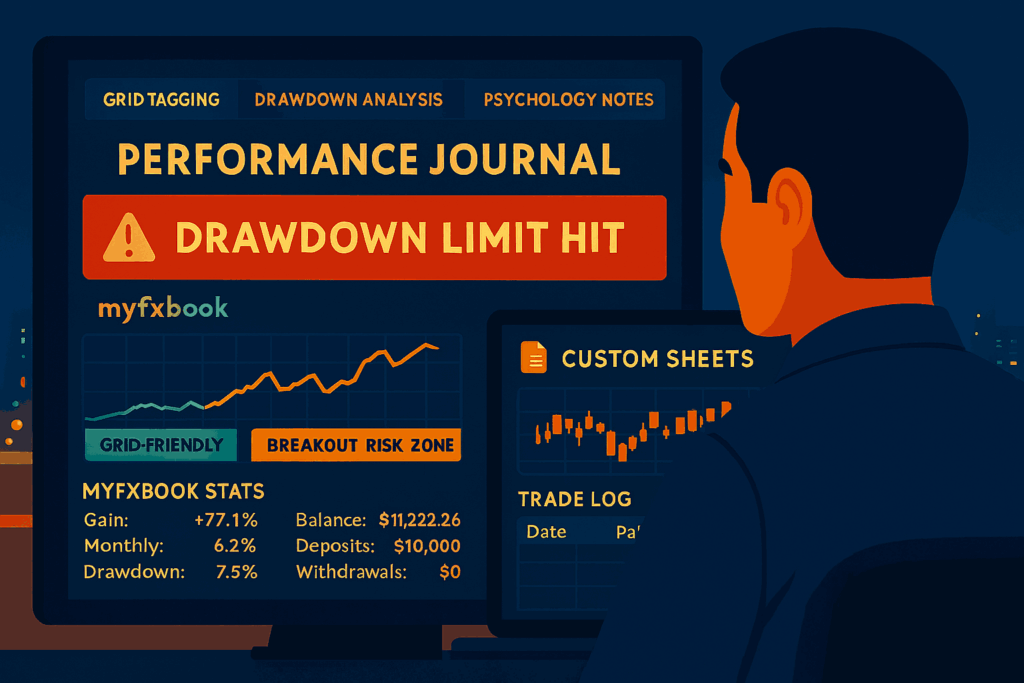
Tracking performance is vital for fine-tuning grid strategies. Without data, traders risk repeating the same mistakes.
- Myfxbook AutoSync: Still the industry leader for account tracking, it allows grid traders to analyze performance across multiple bots and pairs.
- Edgewonk 3.0: A powerful journal that lets traders tag grid trades, measure risk/reward, and analyze psychological performance.
- Custom Excel/Google Sheets Dashboards: For traders who prefer manual logging, ready-made templates now exist specifically for grid strategies, complete with drawdown tracking.
Why they matter: They transform raw trading results into actionable insights.
5. Mobile Control Panels
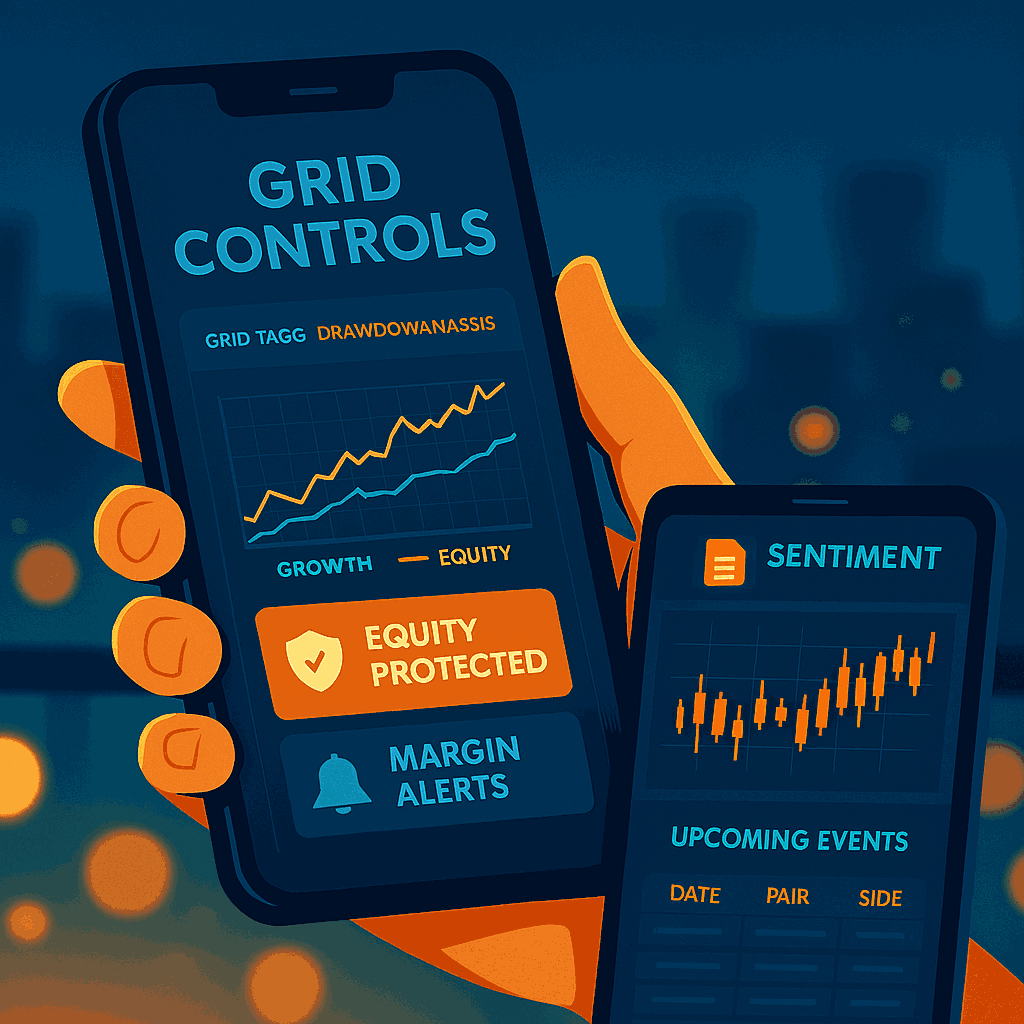
In 2025, no trader wants to be tied to a desktop. Mobile apps have evolved into full command centers for grid strategies.
- MT5 Mobile & cTrader Mobile: Allow placing, adjusting, and monitoring grids directly from smartphones.
- Broker-Specific Apps: Many brokers now offer proprietary apps with built-in grid management features, from adjusting spacing to activating equity stops.
- Push Notifications: Alerts on margin usage, equity drawdowns, or grid expansion keep traders in control even when away from their desks.
Why they matter: They give traders peace of mind and flexibility, especially in volatile markets.
Final Thoughts
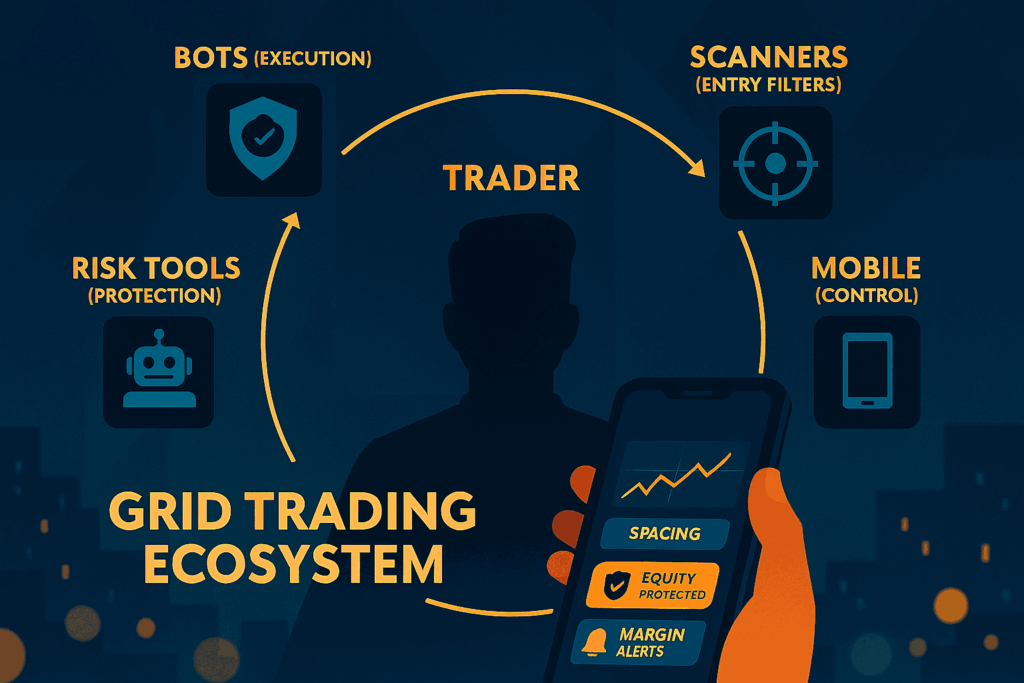
By 2025, managing a grid trading strategy isn’t about brute force or constant monitoring, it’s about leveraging the right tools. Advanced bots handle execution, risk management software prevents wipeouts, scanners optimize conditions, journals guide improvements, and mobile apps keep you connected on the go.
The best traders don’t just rely on one tool but create an ecosystem of resources that keeps their grid systems efficient and resilient. In a market where trends can shift in seconds, being equipped with the right tools is no longer optional, it’s the foundation of long-term success.