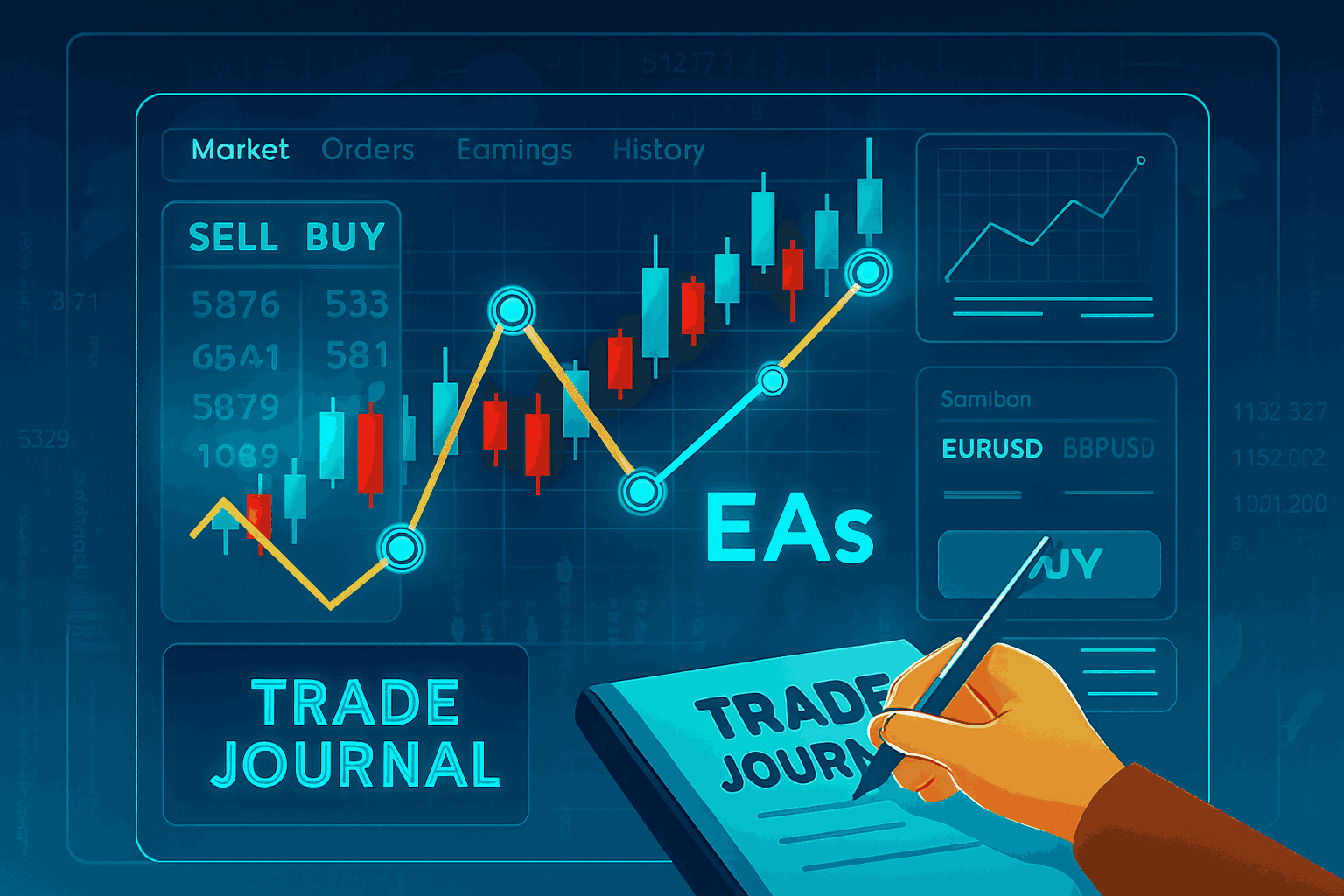
Grid trading has always been appealing to traders who want to capture profits in sideways or ranging markets. Instead of betting on a single direction, the system layers buy and sell orders at predefined intervals creating a “grid” of trades that harvests price swings. But managing these grids manually is impractical in live markets. That’s where MT4 and MT5 Expert Advisors (EAs) come in, offering full automation and precise execution.
In 2025, MT4/MT5 remain the most widely used platforms for retail Forex traders, and their Expert Advisors are still the go-to solution for automated grid execution. Here’s how they work, what to watch out for, and how to use them effectively.
1. How Grid EAs Work on MT4/MT5
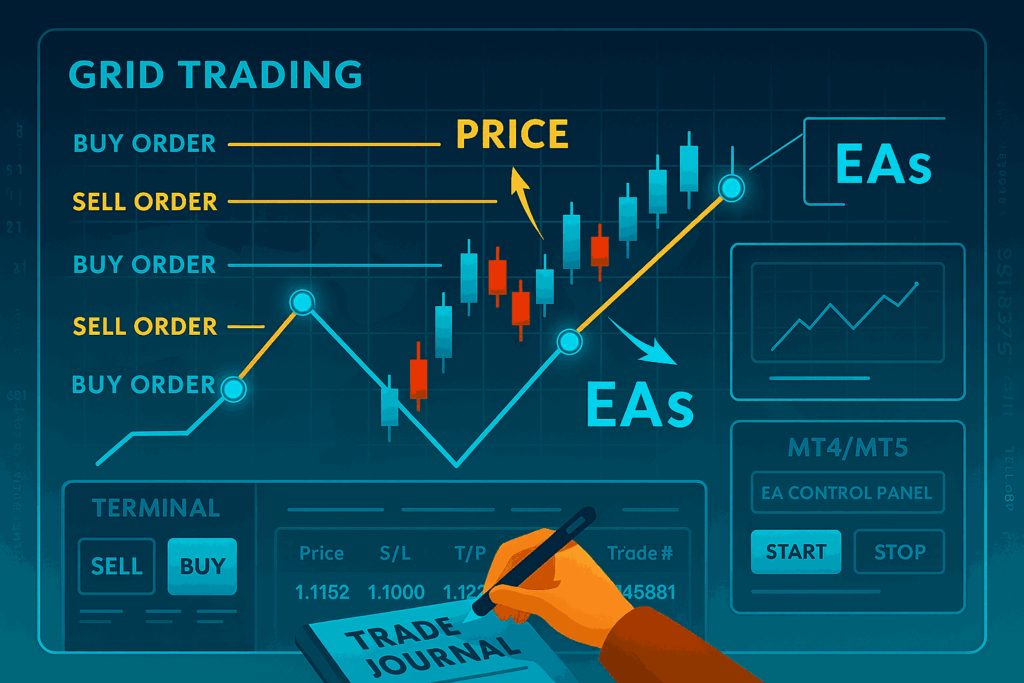
At their core, grid EAs remove the manual effort of placing multiple buy and sell orders. Traders define the spacing, lot sizes, and take-profit/stop-loss rules. From there, the EA handles execution automatically.
- Order Placement: The EA opens buy and sell trades at set price intervals, creating the grid structure.
- Profit Locking: Once price swings back, the EA closes profitable legs while keeping the rest of the grid intact.
- Adjustable Spacing: Traders can define fixed pip distances or dynamic spacing based on volatility.
- Re-entry: Many modern EAs reopen closed positions automatically to keep the grid active.
This automation allows traders to run grids across multiple pairs without having to sit at the screen for hours.
2. Popular Grid EA Features in 2025
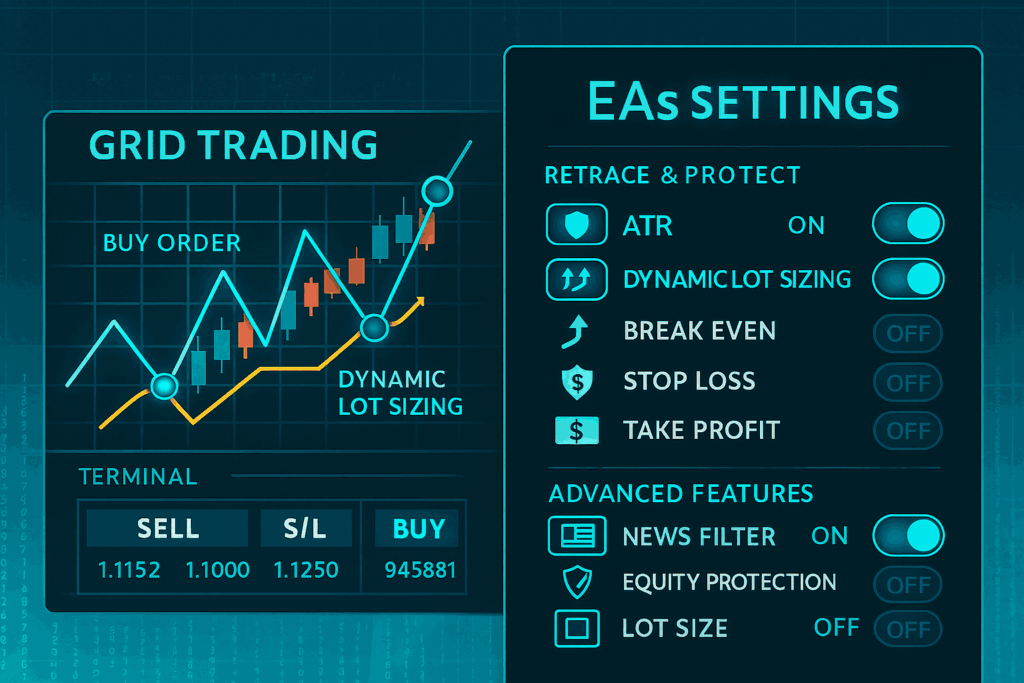
Grid EAs have evolved significantly. The latest versions often include built-in filters and protective tools:
- News Filters: Pause trading during major economic events like NFP or central bank decisions.
- Equity Protection: Automatically shut down the grid if account equity drops below a threshold.
- Dynamic Lot Sizing: Adjust lot sizes based on account balance, volatility, or ATR readings.
- Hedging and Recovery Modes: Some EAs can hedge against runaway trends or use martingale-style adjustments (though this increases risk).
These upgrades make grid bots more adaptable, but they also demand careful customization.
3. Setting Up a Grid EA on MT4/MT5
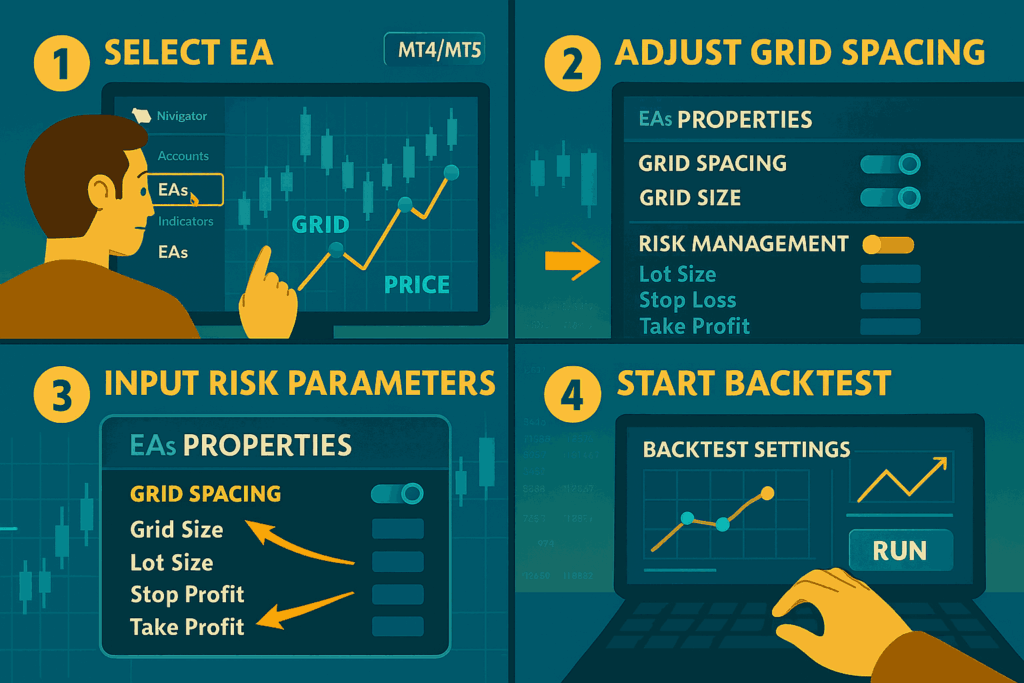
Getting started is straightforward, but success comes from fine-tuning the settings:
- Choose the Right EA – There are free and paid options, but stick to those with verifiable backtests and real trading track records.
- Optimize Spacing – Wider spacing works better in volatile pairs like GBP/JPY, while tighter grids fit calmer pairs like EUR/USD.
- Set Conservative Lot Sizes – Over-leveraging is the fastest way to wipe out a grid account. Start small and scale gradually.
- Backtest and Forward Test – Run simulations on historical data, then use demo accounts before going live.
- Enable Risk Controls – Always activate equity stops and margin protection features.
4. The Risks of Automated Grid Trading
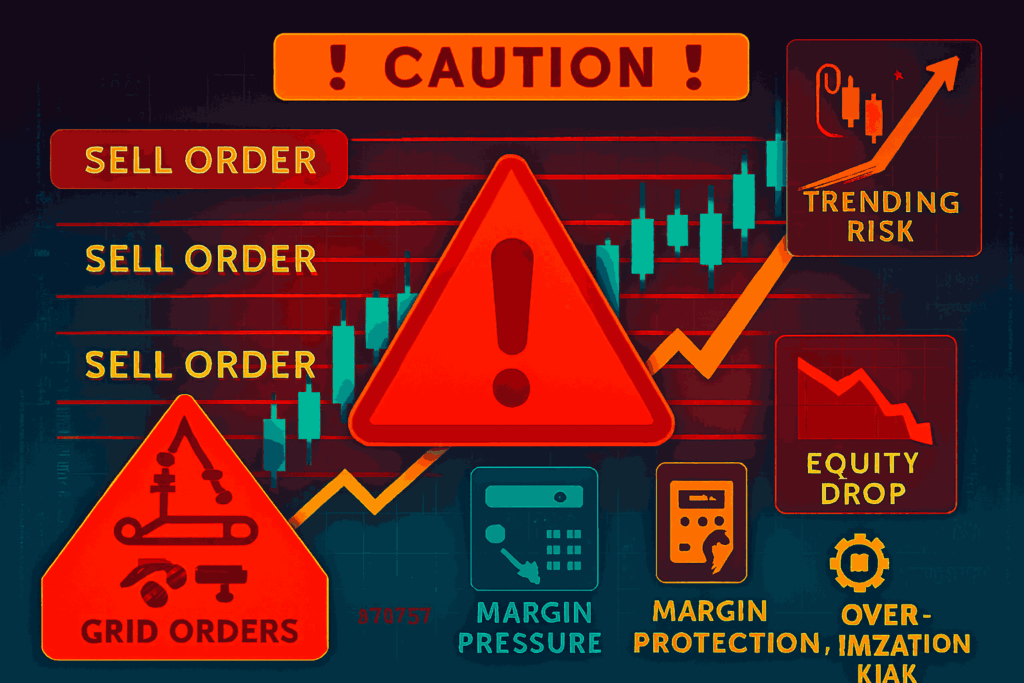
While automation is powerful, it doesn’t eliminate the inherent risks of grid strategies.
- Trending Markets: A strong one-way move can leave a grid overloaded with losing trades.
- Over-Optimization: Fine-tuning settings for past data doesn’t guarantee future success.
- Margin Pressure: Multiple open positions can eat into margin quickly.
- False Security: Automation can make traders complacent. Grids must still be monitored.
The key is to treat EAs as tools, not magic bullets. They remove execution errors but can’t fix a flawed strategy.
5. Best Practices for Grid EAs
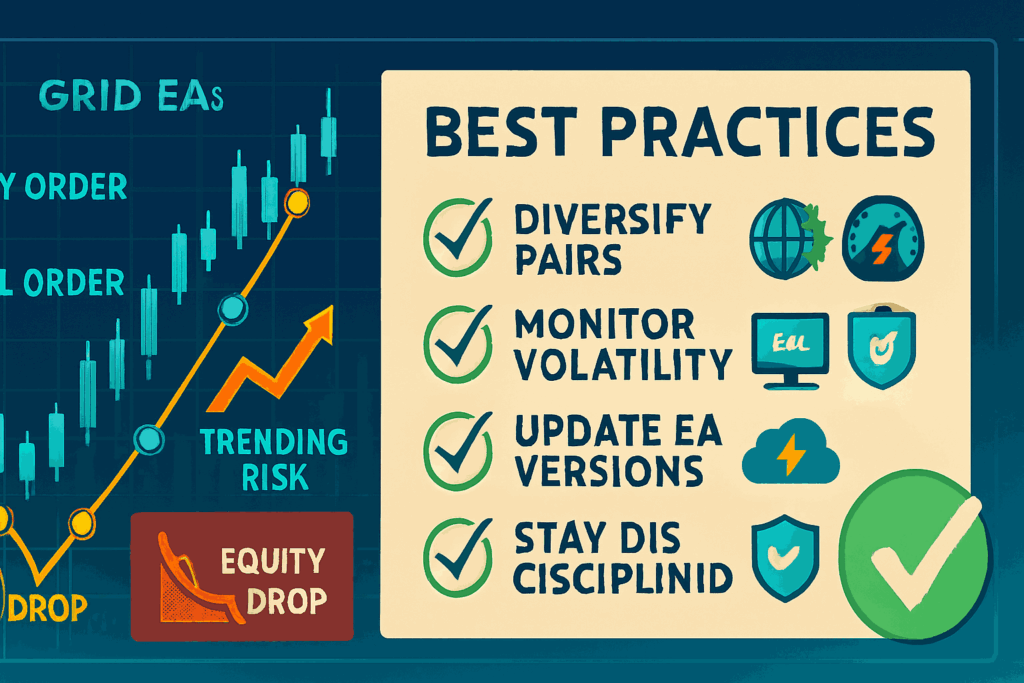
If you plan to use MT4/MT5 EAs for automated grid execution, keep these guidelines in mind:
- Run Multiple Accounts or Pairs: Diversify across pairs to avoid being caught in a trend-heavy market.
- Monitor Volatility: Use ATR or volatility dashboards to decide when to pause grids.
- Update Regularly: Developers often release new versions to adapt to market changes keep your EA updated.
- Stay Disciplined: Don’t manually interfere unless necessary; consistency is key.
- Use VPS Hosting: Running your EA on a Virtual Private Server ensures 24/7 uptime with minimal latency.
Final Thoughts
MT4/MT5 Expert Advisors are the backbone of automated grid trading. They simplify execution, enforce discipline, and allow traders to scale strategies across multiple markets. But like any trading tool, their success depends on smart settings, risk management, and trader oversight.
In 2025, the best traders aren’t just running EAs blindly they’re combining automation with human judgment, using technology to take care of execution while keeping strategy and risk control firmly in their hands.