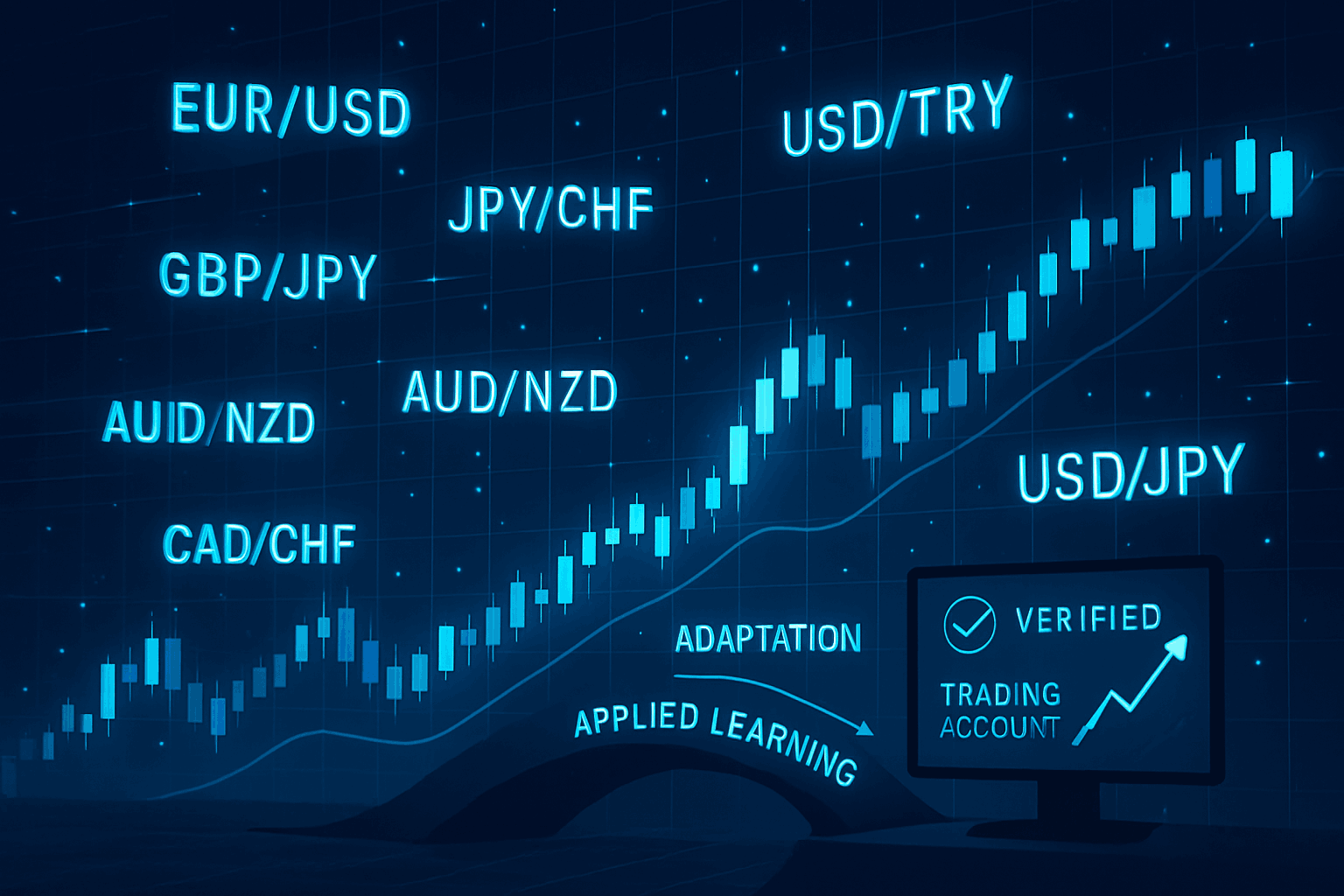
Grid trading has earned a reputation as one of the most versatile and automated approaches in Forex. At its core, a grid strategy places buy and sell orders at predetermined intervals, creating a “net” that captures profits as prices oscillate. While the concept is simple, its application differs widely depending on the currency pair being traded. To trade effectively, it’s essential to adapt grid strategies based on the unique behavior of each pair. A grid that works beautifully on EUR/USD may collapse on GBP/JPY or exotic pairs if not adjusted correctly.
To succeed with grid trading, traders must understand how volatility, liquidity, spreads, and market behavior vary across different pairs and adapt their strategy accordingly. Let’s break this down step by step.
1. Grid Trading with Major Pairs (EUR/USD, GBP/USD, USD/JPY)
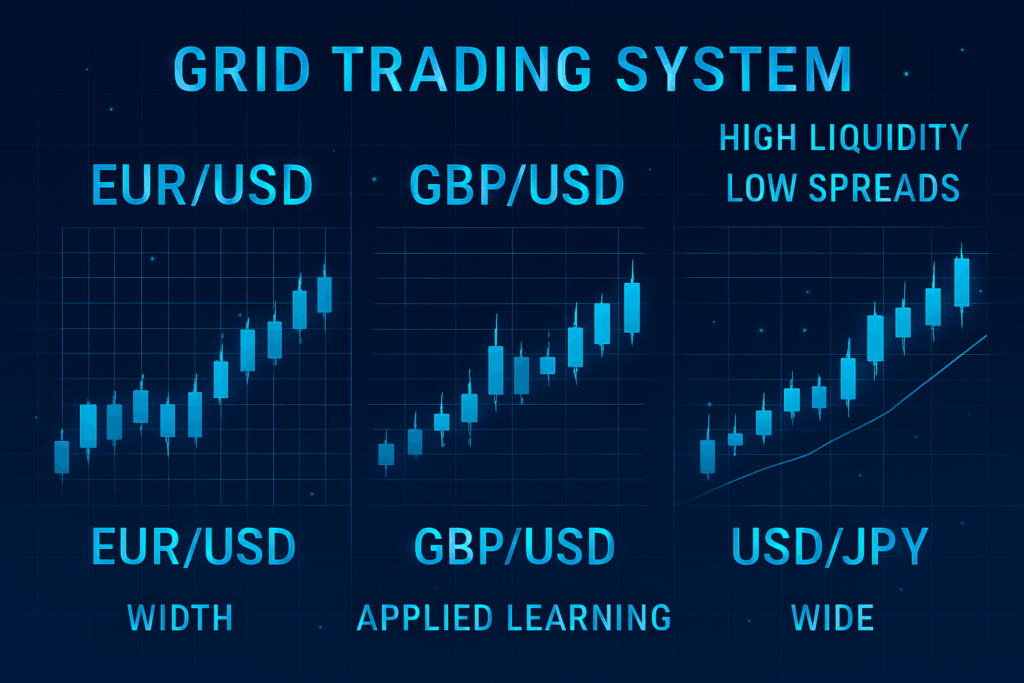
Major currency pairs are the most liquid in the Forex market. Their tight spreads and relatively stable behavior make them a natural fit for grid systems.
- EUR/USD: Known for its deep liquidity and moderate volatility, EUR/USD is perfect for tighter grid spacing. Bots can place orders more frequently, and because spreads are small, transaction costs remain manageable.
- GBP/USD: This pair is more volatile, especially during London and New York sessions. Wider grid spacing is often necessary to prevent overtrading during strong intraday moves.
- USD/JPY: As a safe-haven currency, JPY responds strongly to risk sentiment. During risk-off markets, volatility increases. Grid traders should widen intervals and reduce lot sizes during such periods.
Best practice for majors: Use tighter grids for stable periods, but be flexible enough to expand spacing during key economic announcements like Non-Farm Payrolls (NFP) or central bank meetings.
2. Grid Trading with Crosses and Minors (EUR/GBP, AUD/JPY, NZD/CAD)
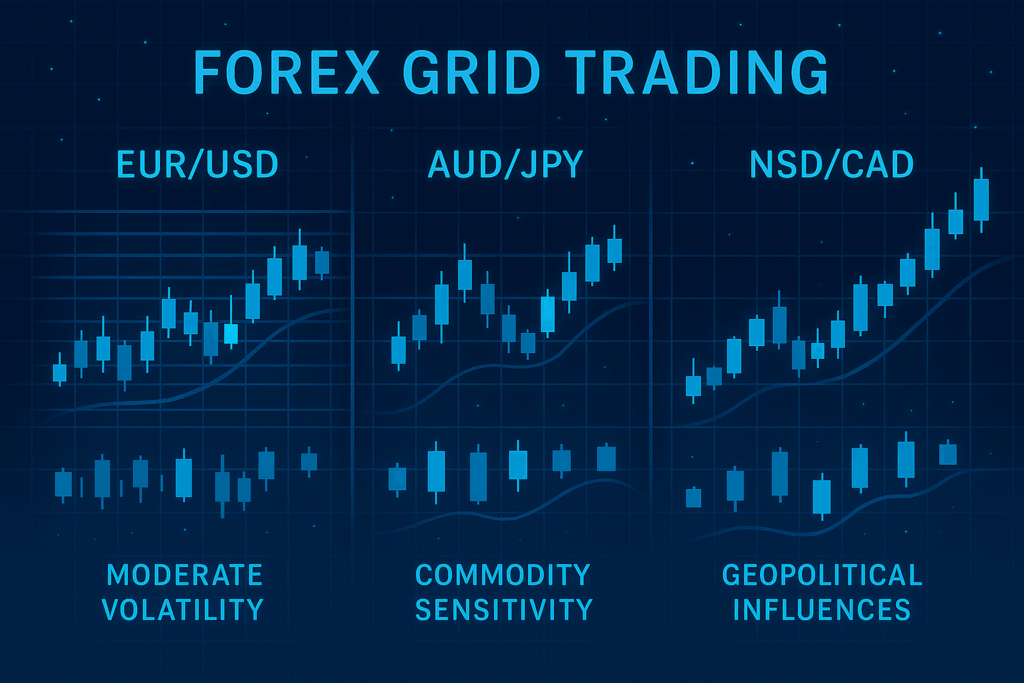
Minor pairs provide more trading opportunities but require fine-tuning because they combine different market behaviors.
- EUR/GBP: Typically less volatile than majors, making it suitable for small incremental grids. However, sudden Brexit-related news can still create sharp movements.
- AUD/JPY: This pair reflects global risk appetite and commodity price changes. It can trend strongly, so traders should implement safety nets like equity stop-losses.
- NZD/CAD: As a commodity cross, it tends to follow oil and agricultural price trends. Grid traders must monitor fundamentals to avoid grid “traps” in trending markets.
Best practice for minors: Build flexibility into your bot or manual system. Incorporate volatility filters so your grid adapts to changing conditions instead of sticking to a rigid structure.
3. Grid Trading with Exotic Pairs (USD/TRY, USD/ZAR, EUR/SEK)
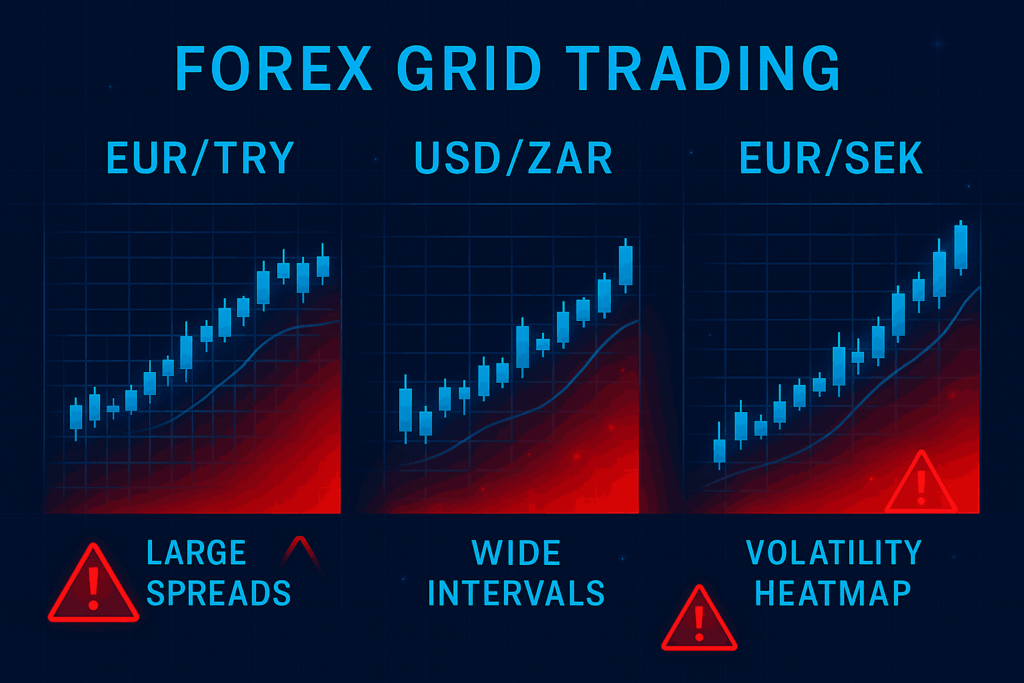
Exotic pairs are riskier for grid trading because they come with high spreads, lower liquidity, and unpredictable volatility. While they can offer massive profit opportunities, they can also wipe out an account if poorly managed.
- USD/TRY: Turkish lira volatility often follows political or central bank decisions. Sudden devaluations can destroy a grid if stops aren’t used.
- USD/ZAR: Highly sensitive to commodity cycles and global risk appetite. During high volatility, grid spacing must be significantly widened.
- EUR/SEK: Scandinavian pairs tend to move more slowly, but spreads can eat into profits if the grid is too tight.
Best practice for exotics: Only use grid trading with small lot sizes and larger safety buffers. Ensure you account for spread costs before deploying a bot or manual system.
4. General Adjustments by Pair Type
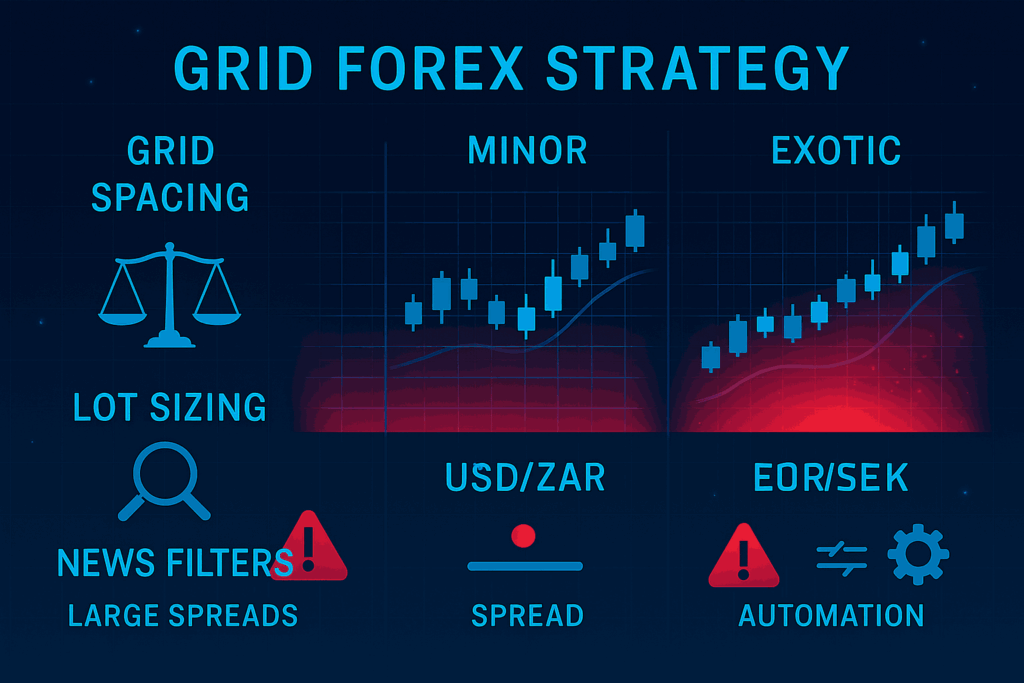
Regardless of pair, grid traders should keep these three adjustments in mind:
- Grid Spacing: Tight spacing for liquid pairs, wide spacing for volatile or exotic pairs.
- Lot Sizing: Larger lots for stable majors, smaller lots for volatile minors and exotics.
- News Filters: Disable or pause bots before high-impact news events like central bank announcements, CPI releases, or unexpected geopolitical developments.
Final Thoughts

Grid trading is not a one-size-fits-all strategy. Each currency pair has its own “personality,” shaped by volatility, liquidity, and sensitivity to global events. The key to long-term success is customization tailoring grid spacing, lot sizing, and risk parameters to the unique behavior of the pair you’re trading.
By adapting strategies to suit different pairs, traders can transform a simple grid into a dynamic system that thrives across market conditions. In short, grid trading becomes less about luck and more about precision.